CAREER / AI TOOL
Resume Analyser
A free AI tool that scores a tech resume for AI-readiness in minutes — and became the company's highest-ROI lead channel.
ROLE
UX Designer
TEAM
1 Product Designer, 2 Developer, 1 product Manager
TOOLS
Figma, GPT, Pen-Copy, Photoshop, Adobe Illustration
7–0K
FAANG placement resumes behind the scoring model
0%
of users wanted instant, data-backed resume feedback
/0
AI-Readiness Score, delivered in minutes
1000s
of resumes analysed within months of launch
THE PROBLEM
Tech professionals targeting FAANG/AI roles had no specialized tool to evaluate their resumes. Generic resume checkers ignored our proprietary FAANG placement data (~7–8K resumes), so candidates were unsure which AI skills or achievements to highlight. At the same time, Interview Kickstart relied on a single, high-friction webinar funnel to capture leads – a bottleneck that left many interested users untapped. In short, job seekers lacked clear, data-driven feedback and the business needed a scalable, low-friction lead generation channel.
THE SOLUTION
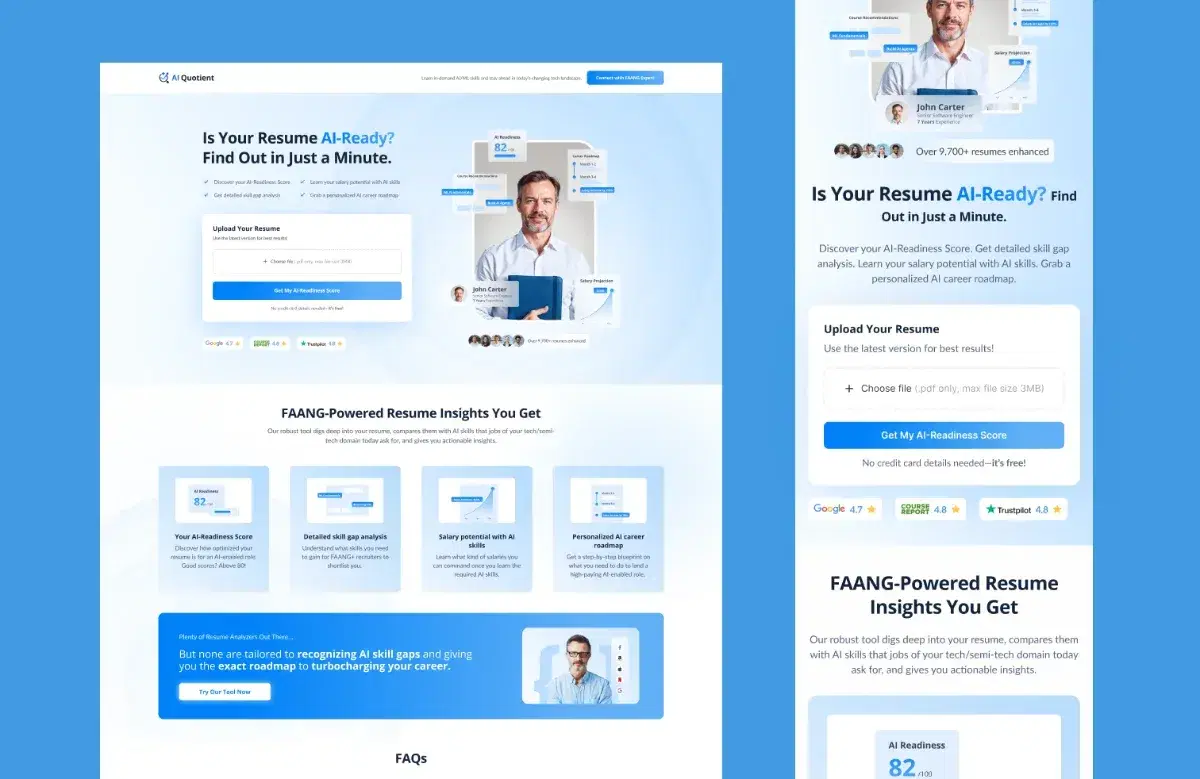
We built an AI-driven Resume Analyzer: users simply upload their CV (on desktop or mobile) and instantly receive an AI-Readiness Score, a detailed skill-gap analysis, salary outlook, and a personalised AI-career roadmap. Leveraging our FAANG-resume dataset, the clean UI presents results with simple charts and plain language so candidates trust and understand the AI insights. As a free, lightweight tool it has already analysed thousands of resumes and become a high-ROI, low-friction lead funnel for IK, providing clear value to users while dramatically improving engagement and conversions.
THE FUNNEL SHIFT
One high-friction entry point became a free, self-serve one.
BEFORE — WEBINAR ONLY
Scheduling, commitment, and a wait between interest and value.
AFTER — FREE ANALYSER
Value arrives first; the conversation starts after the insight.
Introduction
01
Context, please!
The Resume Analyzer project was built to empower tech professionals and jobseekers to understand how their resumes measure up for AI and data-driven roles. The tool utilizes advanced algorithms to analyze skills, experience, and benchmarks against industry standards.
02
My Contribution
Responsible for feature planning with stakeholders, trend analysis, competitive research, user flows, wireframing, visual design, prototyping, and overseeing UI handoff to developers.
03
But wait, what's the Resume Analyzer?
This platform reviews uploaded resumes, scores them for AI-readiness, highlights skill gaps, and generates personalized career roadmaps. It's designed to democratize career growth, leveling the field for applicants regardless of background.
Through Resume Analyzer, any candidate can receive actionable feedback on their resume within minutes — offering transparency, personalized recommendations, and strategic insights for career advancement.
Why resume analysis?
Understanding user motivation revealed a top priority: most candidates wanted objective feedback and clear, actionable next steps for their career development.
85%
of users wanted instant, data-backed resume feedback.
↗
Growing demand for AI/data-centric tech roles.
★
The tool helps users compete for top roles, improving their marketability and job search outcomes.
It was clear that the core focus was on empowering users to improve their resume and career trajectory. The audience included early-career professionals and experienced tech talent seeking robust feedback and industry insights.
HOW I WORKED
Think → Make → Check, then repeat.
Think
Trend spotting
Competitor analysis
User research
Make
IA, User journeys
Wireframes
UI & Prototype
Check
Rapid usability testing
Design audits
MVP release & analysis
Trend analysis
Involved reviewing leading resume analysis platforms and tech hiring processes, identifying gaps and best practices for user experience and feature set.
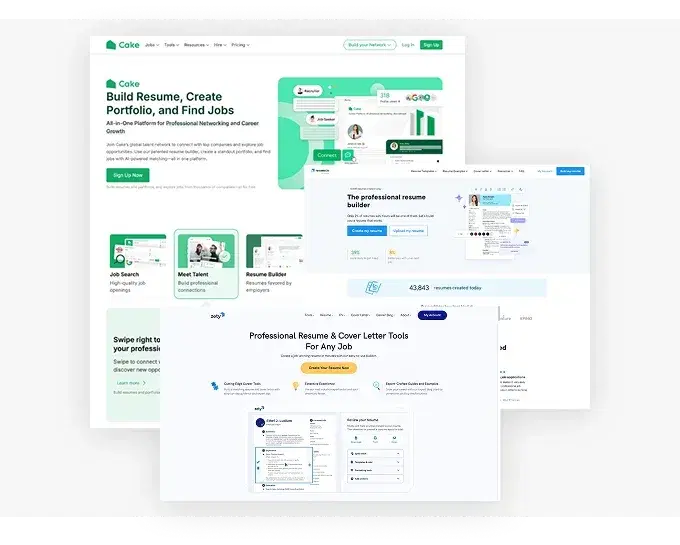
Landing Page
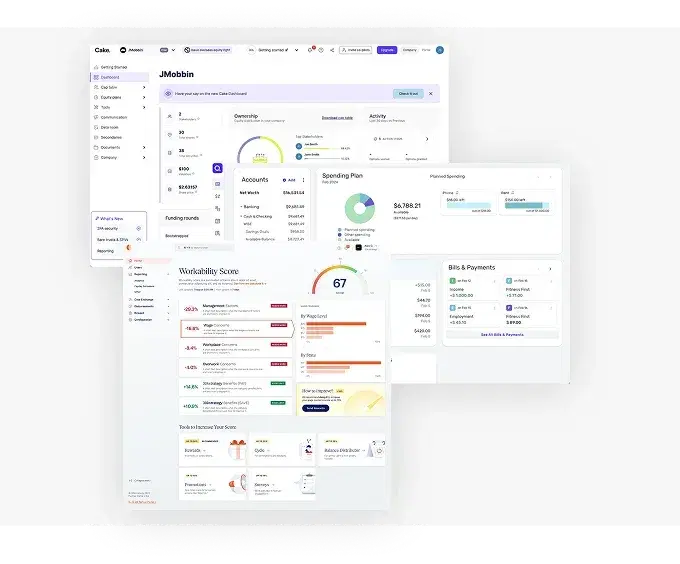
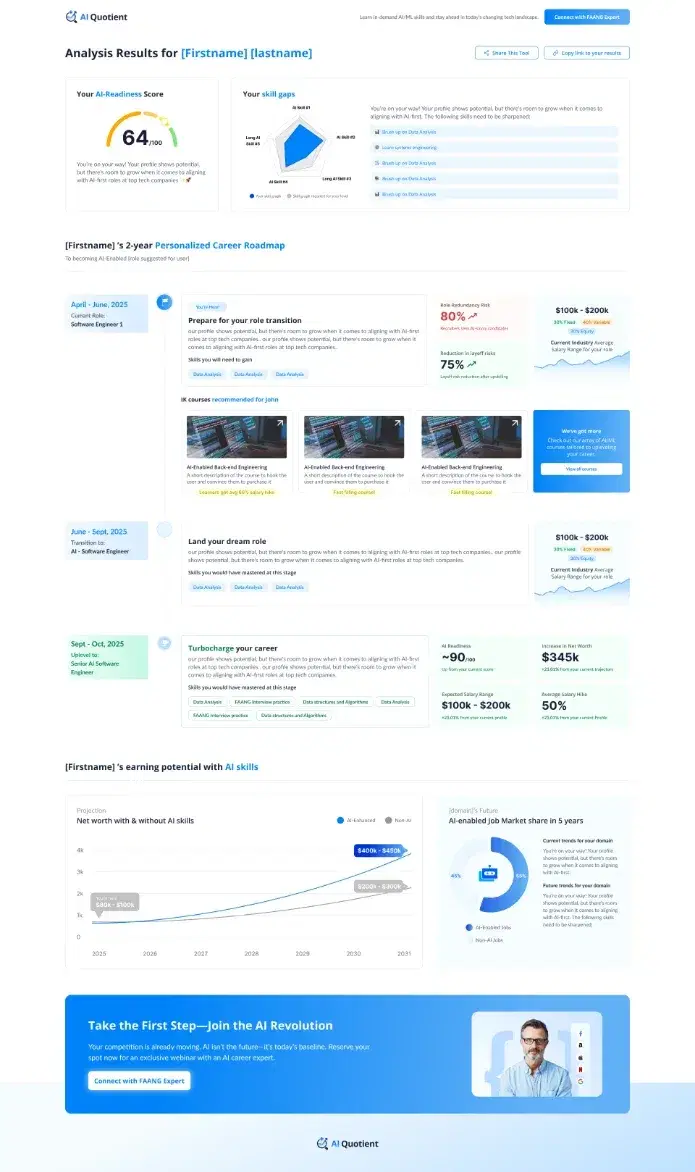
Result Page
Multiple rounds of informal interviews constituted my primary research for this project, focusing on the resume optimization needs of tech professionals.
What does an ideal resume for a tech role look like?
Where do users struggle most?
How can feedback be made actionable?
Additionally, I explored user perception of AI-driven resume tools and benchmarked leading platforms to validate existing capabilities and pain points. Key insights included:
Top platforms were most trusted for actionable feedback and guidance.
The most attractive aspect was instant, unbiased scoring and clear, improvement-oriented suggestions.
Users valued personalized career advice but were concerned about generic recommendations or missed nuances.
Although I was involved in stakeholder alignment and feature planning, product and design teams collaborated to finalize scope through initial PRDs.
First design priorities
Map out core user journeys, including secondary and edge cases.
Develop information architecture to ensure logical navigation and category clarity.
INFORMATION ARCHITECTURE
3 primary branches · 4 levels deep
LANDING PAGE
Dashboard
AI-Readiness Score
Personalized Career Roadmap
Recent Resume Analysis
Resume Upload (PDF)
Quick Actions
Analyze new resume
View previous results
Update profile
Insights & Feedback
Skill Gap Analysis
Benchmark Comparison
Industry Demands
User Profile
Contact Info
Experience Levels
Current Role/Skills
Editable Sections
Resources
Tips for Resume Improvement
Career Growth Articles
FAQs & Help
ANALYSIS FLOW
Resume Upload
Upload PDF
Format check
Resume Processing
AI-powered Parsing
Keyword Extraction
Experience Matching
Education & Skills Extraction
Result Page
AI-Readiness Score
Skill Gap Insights
Recommendations
Courses / Suggested Skills
Resume Formatting Advice
Career Path Suggestions
Download / Export Report
Next Steps / Actions
BENCHMARKS & FEEDBACK
Comparison to Industry Standards
Peer score visualization
Role-based insights
User Actions
Share report
Schedule expert review
Save to profile
Primary branch
Screen / module
Nested action
After validating navigation, I created wireframes using best practices for resume analysis web apps.
QUESTIONS CONSIDERED
01
How quickly can feedback be delivered?
02
Is resume upload frictionless?
03
Are improvement areas highlighted clearly?
I worked closely with engineering to embed global UI elements, onboarding, entry and exit points, and error states.
Usability testing & iteration
Wireframes and UI underwent several rounds of rapid usability tests, design audits within the design team, and alignment reviews with product, engineering, and data stakeholders.
WHAT TESTING SURFACED
Upload felt heavier than it needed to be, and skill-gap results were read as vague.
WHAT CHANGED
Feedback led to a streamlined upload process and better clarity in skill gap reporting.
With most usability obstacles surfaced and resolved, I designed an interactive prototype in Figma reflecting the core user journey. This allowed detailed testing and refinement ahead of development handoff. Throughout development, I provided ongoing support for QA, final release, and post-launch enhancements.
Final outcome
Score
out of 100
THE AI-READINESS SCORE
The final results dashboard presents a personalised analysis. At a glance, users see their AI-Readiness Score (out of 100) and actionable insights: skill gaps to address, a recommended career roadmap, salary projections, and more. The design groups information into digestible cards and charts, making a complex analysis feel intuitive.
LANDING PAGE
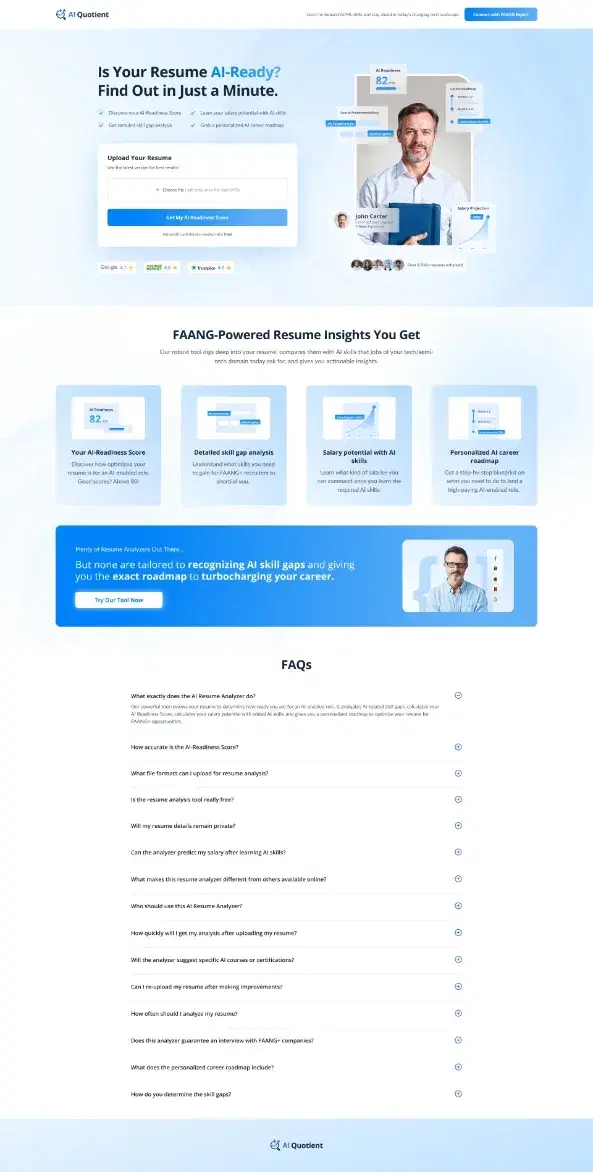
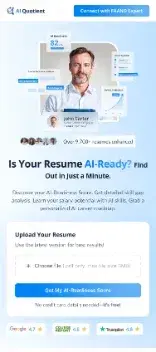
RESULTS DASHBOARD
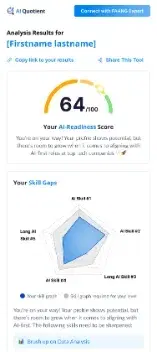
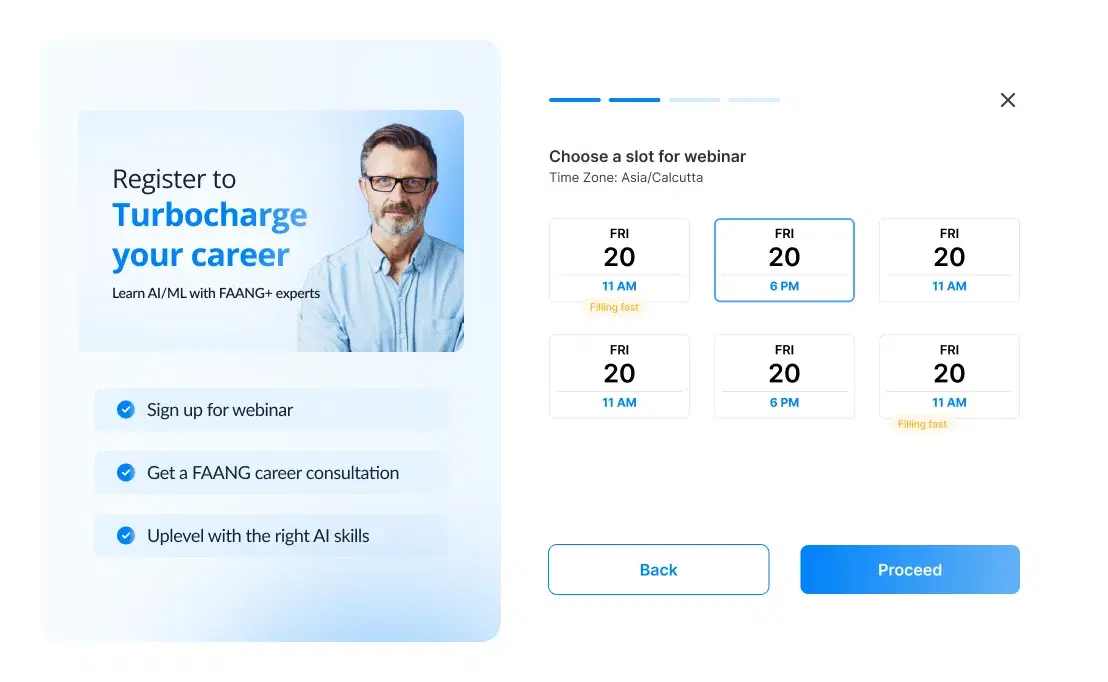
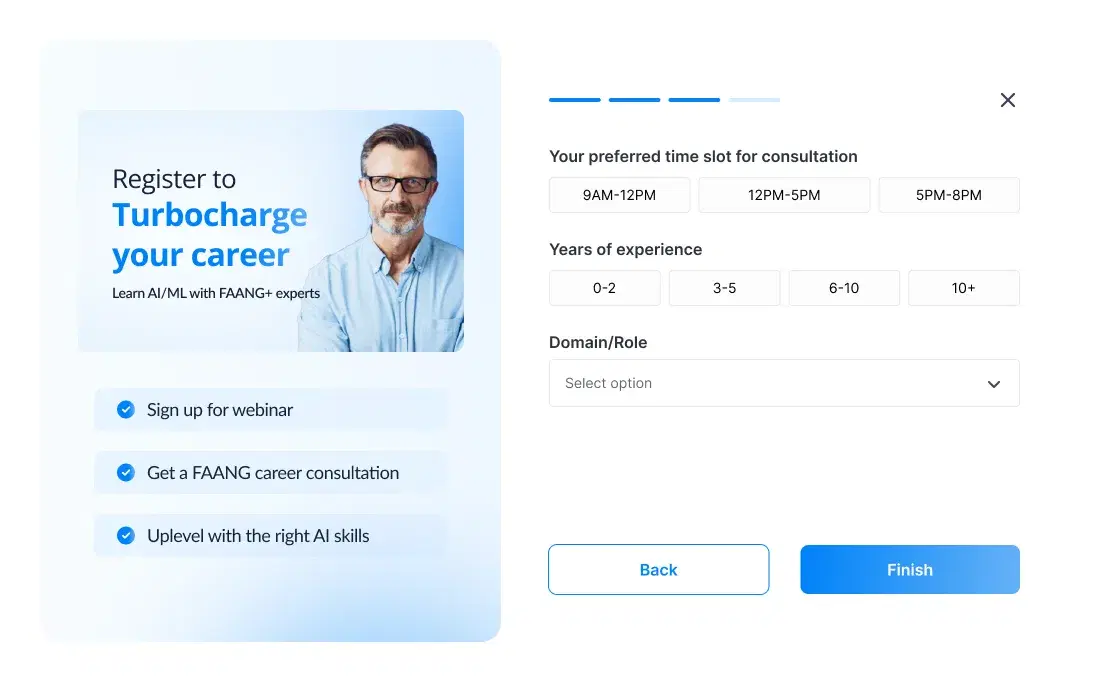
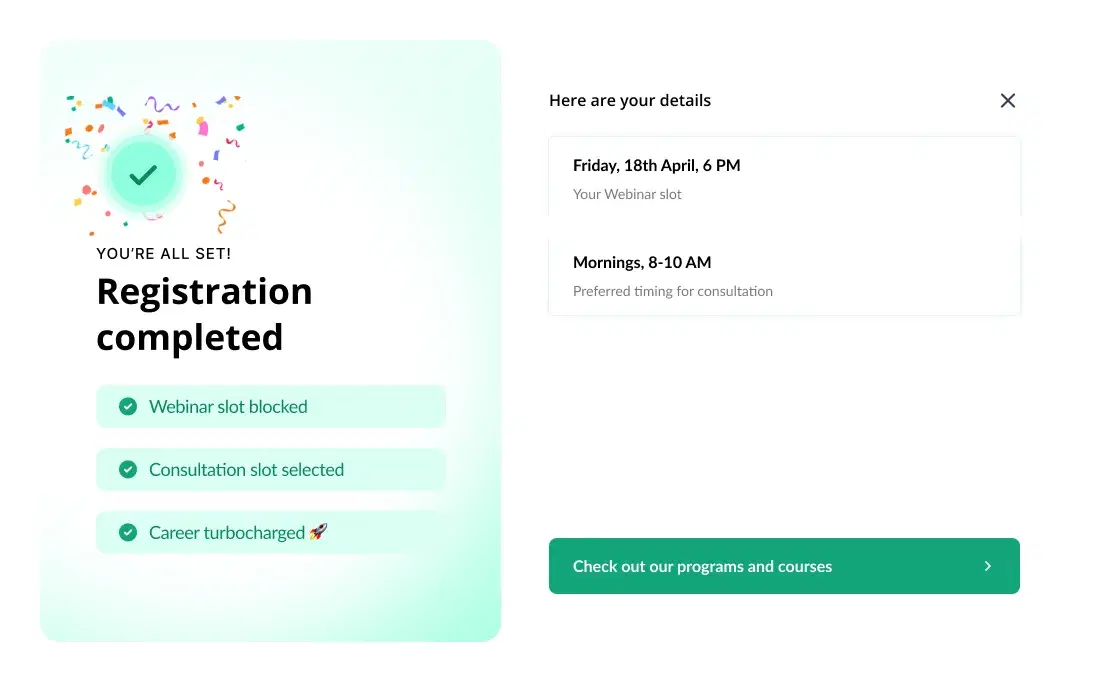
REGISTRATION & BOOKING FLOW
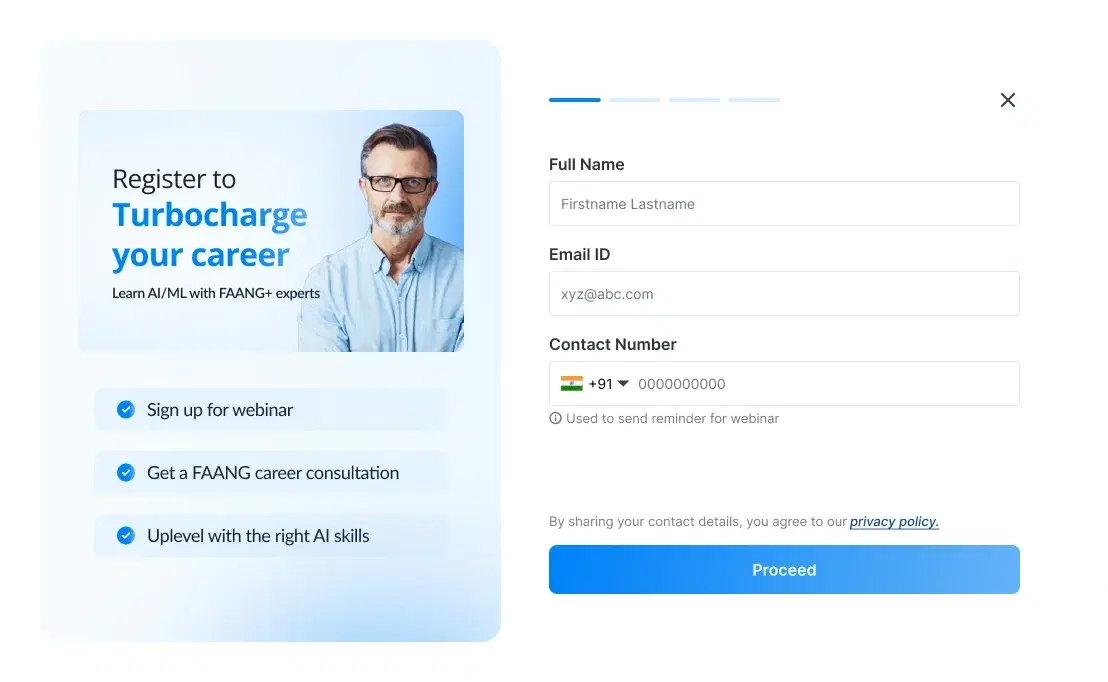
IMPACT
Clear feedback for candidates, a scalable acquisition funnel for the business.
1000s
of resumes processed within months of launch
★
a top-performing lead magnet on the website
↑
visitor-to-lead conversion up against the old webinar path
The launch of the AI Resume Analyzer delivered immediate business impact. Within months it processed thousands of resumes and became a top-performing lead magnet on the website. According to the product team, it established a "high-volume, high-ROI lead generation channel". Visitor engagement on the site increased – users spent more time interacting with the tool – and the conversion rate (visitor to lead) improved significantly compared to the old webinar path. User feedback was also positive: many reported that the insights were eye-opening and helped them quickly pinpoint resume fixes. In short, the design achieved both sides of the goal: it provided clear, valuable feedback for candidates and built a scalable acquisition funnel for IK.
Tools used
Learnings
This project underscored that clarity is king in data-driven design. Even the most powerful AI insights fail if the UI is confusing, so focusing on simple visuals and straightforward language was crucial. I also learned the importance of tight collaboration: by working hand-in-hand with engineers and data scientists, we could iterate rapidly on how the AI metrics translated to UX. Using an AI assistant (GPT) for early copy ideas proved valuable – it jump-started the writing process and suggested angles we might not have tried solo. Finally, seeing real users respond to the design (through analytics and feedback) taught me to remain flexible; the initial design required tweaks after launch, reinforcing that continuous iteration is key to a product's success. This experience sharpened both my design and cross-functional skills, and it provided the team with a strong blueprint for future AI-driven features.